ONLINE THERAPY IN california & WASHINGTON STATE
Childhood Trauma & Emotional Neglect Therapy
Growing Up Was Hard

Does this sound familiar?
You had a difficult upbringing
Your childhood wasn’t easy. You might have experienced abuse, neglect, loss, hurt, pain, and confusion. While you think of these experiences sometimes, you’ve never really processed them.
When someone brings it up, you laugh, change the conversation, or deflect by saying, “Who didn’t go through something like this growing up?” or to comparison like, “I didn’t have it that bad. Other people did”.
Flash forward to adulthood. You made it through those difficult times. You’re older now and on paper, you’re doing well. Attended a good school, financially secure, living in a nice home, and overall, life is good.
However, there are moments where you wonder what life would have been like if you grew up differently.
You ask yourself:
Would it be easier for me to trust others and be vulnerable?
How do I ask for what I want and need?
Would I be kinder to myself when things don’t go my way rather than automatically go to judgement and criticism?
Would I know how to relax, slow down, and enjoy life rather than worry about waiting for something bad to happen?
Attachment or Developmental Trauma
Results from incidents/events/experiences from one’s parents, primary caregivers, and/or those who are responsible for a child’s welfare (teachers, babysitters, etc.).
Usually occurs in the first 3-4 years of life.
Examples of Attachment & Developmental Trauma
Being carried in the womb of a mother who does not want you
Being carried in the womb of a mother experiencing trauma, dissociation, depression, or anxiety
Mother using alcohol/substances/drugs during pregnancy
Feeling rejected, blamed, or even hated by one or both parents
One or both parents struggling with connection issues themselves
Attachment attempts with a dissociated, chronically depressed, anxious, or angry parents
A parent with personality functioning issues (borderline, narcissistic, antisocial, etc.)
Being made to feel like a burden
Physical or emotional abuse
Neglect
Adoption
Adverse Childhood Experiences (ACES)
Adverse childhood experiences, or ACEs, are potentially traumatic events that occur in childhood (0-17 years) including:
experiencing violence, abuse, or neglect
witnessing violence in the home or community
having a family member attempt or die by suicide
ACEs can have a tremendous impact on future violence victimization and perpetration, and lifelong health and opportunity.
ACEs are common. About 61% of adults surveyed across 25 states reported they had experienced at least one type of ACE before age 18, and nearly 1 in 6 reported they had experienced four or more types of ACEs.
Preventing ACEs could potentially reduce many health conditions. For example, by preventing ACEs, up to 1.9 million heart disease cases and 21 million depression cases could have been potentially avoided.
Some children are at greater risk than others. Women and several racial/ethnic minority groups were at greater risk for experiencing four or more types of ACEs.
ACEs are costly. The economic and social costs to families, communities, and society totals hundreds of billions of dollars each year. A 10% reduction in ACEs in North America could equate to an annual savings of $56 billion.
Take the ACES quiz here.
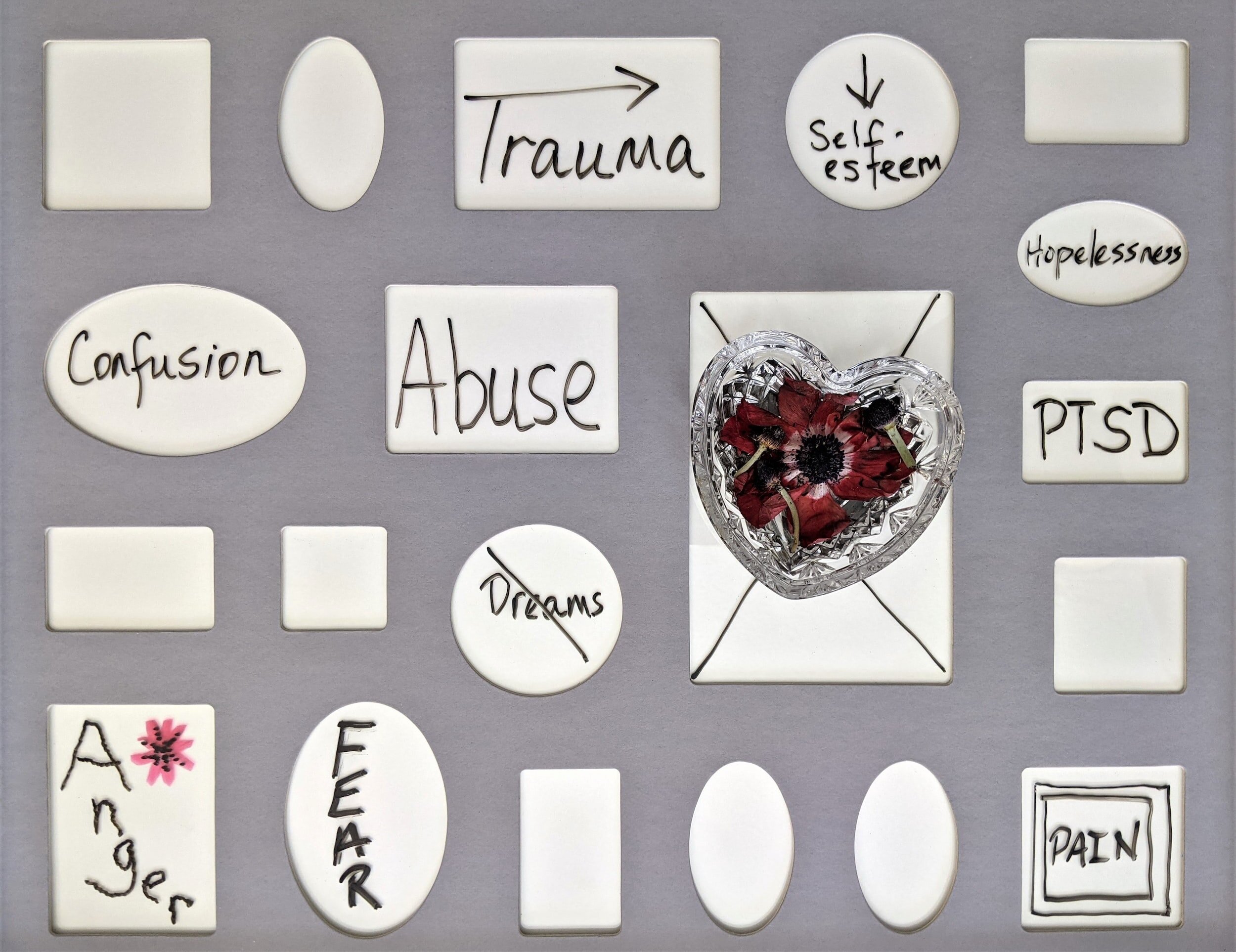
Are These Common Experiences?
Click on the boxes to learn more.
-
Physical abuse
Verbal abuse
Emotional abuse
Sexual abuse
Incest
Coercion
Threats
Bullying
-
The four types of difficult parents:
The emotional parent instills feelings of instability and anxiety
The driven parent stays busy trying to perfect everything and everyone
The passive parent avoids dealing with anything upsetting
The rejecting parent is withdrawn, dismissive, and derogatory
Your parents lacked the ability to feel and process their emotions in a healthy way.
Your parents were often not physically around due to working constantly, going out, or being preoccupied with other things.
Your parents were selfish and put their needs before your needs.
Your parents had too rigid boundaries or no boundaries at all.
You came to your parents so they could soothe, comfort, and love you, but instead you were met with criticism, demand, and judgement.
It wasn’t uncommon to hear things like, “Why are you crying? You shouldn’t be sad.” Or “Stop your anger. Now you’re making me angry.”
Perhaps your parents left you alone. You craved connection, care, and attention, yet never received it. So you slowly learned to internalized your needs in silence. You became self-reliant and sought to control what you could control.
Perhaps you studied and became a great student. Maybe you learned to protect yourself through self-attack, self-judgement, and self-sabotage, denying your own wishes and desire because you feared rejection and abandonment.
-
As a child, you were often the parent and your parent was often the child due to the role reversal. Boundaries were blurred. Maybe there weren’t any boundaries.
You were burdened with your parents’ intimate emotions, fears, and worries. Perhaps you took on household duties and responsibilities.
Many people hear this when they are parentified, “You are so mature for your age”. While this is meant as a compliment, it can be harmful for children because their self worth is tied into what they can do for others.
-
Chaos, conflict, worry, and unpredictability sums up your childhood environment.
To survive, you learned to take care of others, managed conflict, and attempted to maintain peace. Now, you feel overly responsible for other’s needs, wants, and emotions. Perhaps you offer advice and help to others, even when it’s not asked for.
-
Witnessing abuse and violence
Witnessing the abuses of power (coercion, yelling, blaming, denying)
Feeling helpless to do anything
Feeling guilty
-
Growing up with someone with undiagnosed mental health issues
Feeling overly responsible for others’ needs/wants
Not openly communicating thoughts and feelings about the effects
Not seeking professional treatment and help
Internalizing feelings and thoughts
-
Feeling torn between your parents/caregivers after a divorce due to conflicting messages of a “bad” parent/caregiver
Feeling worried if one parent/caregivers will leave you and not come back (e.g. abandonment, worry, anxiety, depression)
Being held to secrets and promises by one parent/caregiver and feeling stuck unsure what to do
Losing friends and support system when you had to move to a new city and home
-
The death of a sibling or parent marked your upbringing with sadness, pain, confusion, and anger.
Maybe you never really got over this loss. Secretly, you are envious and angry at others who still have their parents and siblings, while you do not. The holidays, anniversaries, and birthdays are especially difficult, but you don’t let others know how you feel. You suffer alone.
-
In every family, there are roles. Perhaps your role was the “bad” child. No matter what you did, it was never enough and you were blamed.
Or you were the caretaker, productive child, or martyr.
Other roles include: peacemaker, mediator, golden child, lost child, truth teller, rescuer, and problem child.
-
You grew up with a parent who immigrated to the United States. Perhaps your parent escaped their country due to war, persecution, and/or oppression. They experienced difficulty adjusting to a new country, a new language, new customs, and lacked community.
They were wary, frustrated, confused, scared, and untrusting of others growing up and passed these feelings onto you.
They told you not to trust certain people. They told you the only way to success was to study hard, keep to yourself, and avoid conflicts.
Common Symptoms Of Childhood Trauma
Codependency
You merge with others instantly. Their needs are your needs.
You seek constant validation from others and give to others without thinking of your needs.
You are often anxious, frazzled, and worried.
Disconnected From Your Body
You have trouble knowing what you’re feeling.
However, you think quite a bit. In fact, you are intelligent and adaptive. You value logic, pragmatism, order, and control.
Over Functioner
To avoid your emotions, you throw yourself into school and work. You excel and become very successful.
This comes at a cost. You work 50-70 hours a week and find it hard to slow down, rest, and relax. You become restless and begin the cycle of overworking, exhaustion, and burn out.
Self-Reliance
You find it hard to ask for help, so you just do everything yourself.
You want others to know what you want and read your mind.
Counterdependency
You have strict and firm boundaries. You expect a lot from yourself and others.
It’s hard to receive from others people (e.g. gifts, love, affection).
You prefer being alone and relying on yourself because it’s hard to trust others.
You are often fearful, anxious, and on edge.
Avoidance
You are terrified of conflicts and disagreements. You go away when things get overwhelming.
After a difficult conversation, you find yourself ruminating over and over.
You isolate yourself for prolonged periods of time. You need excessive amounts of space away from people.
Shame
You feel like bad, unworthy, not enough, and inadequate.
You judge yourself more harshly than you judge others.
Body Tension
You feel tense in your body all the time. You find it hard to relax and hold your breath often, without even realizing it.
When someone hugs you, they make a joke that you’re stiff like a board.
Therapy For Childhood Trauma Can Help You
✔️ Facilitate and deepen inner child work: Learn to re-parent yourself or treating yourself as you deserved to be treated by your ideal parent/caregiver
✔️ Move from codependency (I need you all the time) or counterdepedency (I don’t need anyone) to interdependency (I have myself and I have support from others as well)
✔️ Decrease avoidance of fears such as conflict and disagreements and increase movement toward values (who and what matters most to you)
✔️ Increase your sense of Self (Self love, Self acceptance, Self esteem, Self worth)
✔️ Ask for your wants, needs, limits, and boundaries effectively
✔️ Increase emotional intimacy, vocabulary, and expression (learning the language of emotions)
✔️ Challenge unhelpful thoughts when you are triggered with more helpful ways of thinking
✔️ Work toward a healthy, secure attachment style through interpersonal awareness with self and others (from an avoidant, ambivalent, disorganized, and/or anxious attachment style)
✔️ Post-Traumatic Growth: Make meaning out of your experiences and embracing life with purpose

Healing Is Possible
There is hope.
I’ve worked with many survivors of childhood trauma who now have more peace, joy, freedom in their lives.
I work with survivors of trauma who are now parents who want to parent healthier children and break the cycle of trauma.
I work with therapists and social workers who are wounded healers.
I work with professionals who feel exhausted, overwhelmed, burnt out, and want to take better care of themselves.
I work with individuals who are dating or in relationships and want to create and sustain healthier and more satisfying relationships.
You can feel more joy and peace.
You deserve to have a life where you feel at home not just in your head, but in your body and emotions. You deserve authentic connection and loving relationships with people you trust and care for.
Reach out today to schedule a consultation.

Blog


Still Have Questions?
-
-
Some clients benefit from brief therapy (1-4 sessions) or short-term therapy (3-6 months) for a single issue.
Other clients benefit from long-term therapy (6-12 months+) for more complex issues.
We’ll end therapy when your goals have been met, your symptoms have decreased, you want space and time to integrate your learning, and/or at anytime you feel therapy isn’t helpful.
Some folks also like to pause and take a break, coming back when necessary.
-
I have 5 years of mental health therapy experience and 7 years of social services experience.
The bulk of my training and experience has been in the realm and intersections of trauma, relationships, and culture.
-
You might cry. Many people do. And it's completely okay.
Crying is a normal, helpful, and natural way for our bodies to release pent-up emotions. Crying is a way to let go of the pain, sadness, or frustration you may be carrying inside.
By crying, you're actually taking a positive step towards healing.
Or you might not cry. And that’s okay too.
-
While it's possible to work on your own personal healing, therapy offers different benefits that may be difficult to achieve on your own.
Talking to a friend, reading self-help books, journaling, and scrolling through TikTok and Instagram are all tools. Therapy is another tool.
Therapists provide:
Accountability
Support
An objective perspective
Structure
Confidentiality
Expertise, skills, and training
However, some people never go to therapy and live full and complete lives.
Therapy is only one way, but not the only way, toward healing, growth, and transformation.
You get to decide if therapy will be an effective and useful tool on your healing journey.

Start Online Therapy Today
Starting therapy can be overwhelming.
I’m here to make it as easy as possible to get help.
I see clients Mondays - Wednesdays virtually for residents of California & Washington.
I see clients in person for Washington State residents on Tuesdays & Wednesdays in Seattle’s Downtown Ballard neighborhood.