ONLINE THERAPY IN WASHINGTON STATE & California
Intensive Short Term Dynamic Psychotherapy (ISTDP)
Feel Less Anxious & Feel Your Emotions & Sensations

You Want To Feel Better & Grow
Have you been in talk therapy for months or years without deep, lasting transformative change?
Do you feel easily overwhelmed and confused by emotions?
Do you feel alone, invisible, and like no one understands your experiences?
Do you avoid conflict, disagreements, and find it hard to ask for what you want?
Do you manage feelings and thoughts by avoiding or distracting through things like working and keeping busy?
I practice a form of therapy called ISTDP which facilitates deep, long lasting, growth, change and insight and works quickly and rapidly.
This approach is not for all clients, especially those who have high levels of dissociation, psychosis, and complex trauma.
ISTDP must be adapted in the cased above and treatment must move slower.
What is ISTDP?
Evolved from traditional psychoanalytic principles based on the premise that unprocessed conflicted feelings related to attachment disruptions contribute to psychological symptoms, somatic symptoms and interpersonal problems.
Focus is on feeling emotions and sensations and using less psychological defenses like avoidance, rationalization, projection, splitting, intellectualizing, comparison, etc.
The goal of ISTDP therapy is to help clients heal from their past trauma/experiences and find ways to live happier and healthier lives.
In ISTDP therapy, we work together and explore your emotions, experiences, and memories related to the past.
One technique is called "experiential" because it helps the client connect with their emotions in a deep and meaningful way. This can involve talking about the trauma or using activities like guided imagery, imagining, inner child work, redoing the past.
I’ll help you build new skills and coping strategies to manage your emotions better, reduce stress, and improve overall well-being.
ISTDP Helps People Who
Intellectualize and use logic to process their emotions
Disassociate or disconnect from their feelings
Fear and avoid vulnerability
Feel stuck in life
Hold tension in their bodies
Have psycho somatic issues related to their mental health issues (e.g. migraines, stomachaches, GI issues, fatigue)
Feel alone in their experiences
Experienced relational and attachment trauma
Experience anxiety, depression, loneliness
Want to increase their self esteem
Experience the same relationship issues and want to shift unhelpful patterns/dynamics

ISTDP Methods
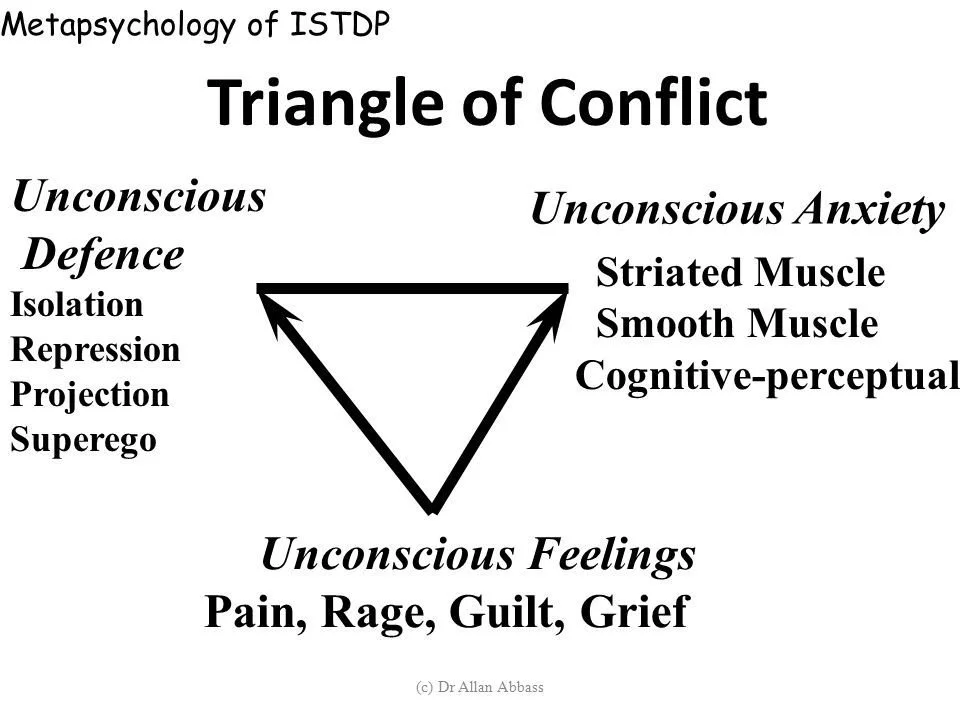
Examples of ISTDP Interventions
Moment to Moment Tracking
Confrontation & Challenge
Clarify defenses
Intelelctualization
Changing the topic
Minimizing
Vaguness
Somaticization
Projection
Splitting
Expand & Build Capacity
Assess where your anxiety is at
Assess how much pressure you can tolerate
Assess what sort of anxiety pathway you tend to take
Gradual exposure/graded approach
Restructure Personality
Portrayals
Corrective experiences
Expressing emotions
Expressing true thoughts

Examples of Helpful & Unhelpful Defenses
Grief
Adaptive/Helpful: Tears over loss, with positive and negative memories. Leads to feeling relief.
Maladaptive/Unhelpful: Tears, leading to feeling worse/hopeless.
Anger
Adaptive/Helpful: A rush of energy to the body limbs, and feeling greater energy to set limits or make a change (boundary).
Maladaptive/Unhelpful: Frustration, leading to greater hopelessness.
Closeness/Tenderness
Adaptive/Helpful: Gentle, unexaggerated, tender connection based on acceptance of the whole person (strengths and weaknesses).
Maladaptive/Unhelpful: Idealized, perfectionistic image of the other person based on self-need and longing. Longing and need-based.
Joy
Adaptive/Helpful: Genuine relaxation and enjoyment. Deeply savoring the pleasurable or spiritual experience.
Maladaptive/Unhelpful: Inauthentic, dissociated, false peacefulness. Exaggerated calmness. Fake smile of serenity on face.
Excitement
Adaptive/Helpful: Vital enthusiasm or curiosity. Life energy. Deep interest and involvement. Spirit.
Maladaptive/Unhelpful: Manic arousal. Urgency about the experience.

ISTDP Therapy Can Help You
✔️ Slow down and stay in the present moment (rather than the past and future)
✔️ Become more comfortable with vulnerability and share your feelings and emotions with someone else (rather than alone)
✔️ Increase access and availability to your emotions and feelings
✔️ Feel less alone (and more connected with yourself and others you care about)
✔️ Feel more safe in your body (and understand the reactions and ways to manage them)
✔️ Better understand why you do what you do (to interrupt unhelpful relationship and emotional cycles)
✔️ Create corrective emotional experiences (to heal from past experiences)
✔️ Trust more in others (and trust yourself)

Healing Is Possible
There is hope.
I’ve worked with many survivors of childhood, attachment, and developmental trauma who now have more peace, joy, freedom in their lives.
I work with survivors of trauma who are now parents who want to parent healthier children and break the cycle of trauma.
I work with therapists and social workers who are wounded healers.
I work with professionals who feel exhausted, overwhelmed, burnt out, and want to take better care of themselves.
I work with individuals who are dating or in relationships and want to create and sustain healthier and more satisfying relationships.
You can feel more joy and peace.
You deserve to have a life where you feel at home not just in your head, but in your body and emotions. You deserve authentic connection and loving relationships with people you trust and care for.
Reach out today to schedule a consultation.

Still Have Questions?
-
-
-
Some clients benefit from brief therapy (1-4 sessions) or short-term therapy (3-6 months) for a single issue.
Other clients benefit from long-term therapy (6-12 months+) for more complex issues.
We’ll end therapy when your goals have been met, your symptoms have decreased, you want space and time to integrate your learning, and/or at anytime you feel therapy isn’t helpful.
Some folks also like to pause and take a break, coming back when necessary.
-
You might cry. Many people do. And it's completely okay.
Crying is a normal, helpful, and natural way for our bodies to release pent-up emotions. Crying is a way to let go of the pain, sadness, or frustration you may be carrying inside.
By crying, you're actually taking a positive step towards healing.
Or you might not cry. And that’s okay too.
-
While it's possible to work on your own personal healing, therapy offers different benefits that may be difficult to achieve on your own.
Talking to a friend, reading self-help books, journaling, and scrolling through TikTok and Instagram are all tools. Therapy is another tool.
Therapists provide:
Accountability
Support
An objective perspective
Structure
Confidentiality
Expertise, skills, and training
However, some people never go to therapy and live full and complete lives.
Therapy is only one way, but not the only way, toward healing, growth, and transformation.
You get to decide if therapy will be an effective and useful tool on your healing journey.

Start Therapy Today
Beginning therapy is the hardest step.
I’m here to make it as easy as possible.
I offer in person therapy in Seattle’s Ballard neighborhood Mondays - Thursdays.
I also offer online therapy for residents of California living in Los Angeles as well as the San Francisco Bay Area.